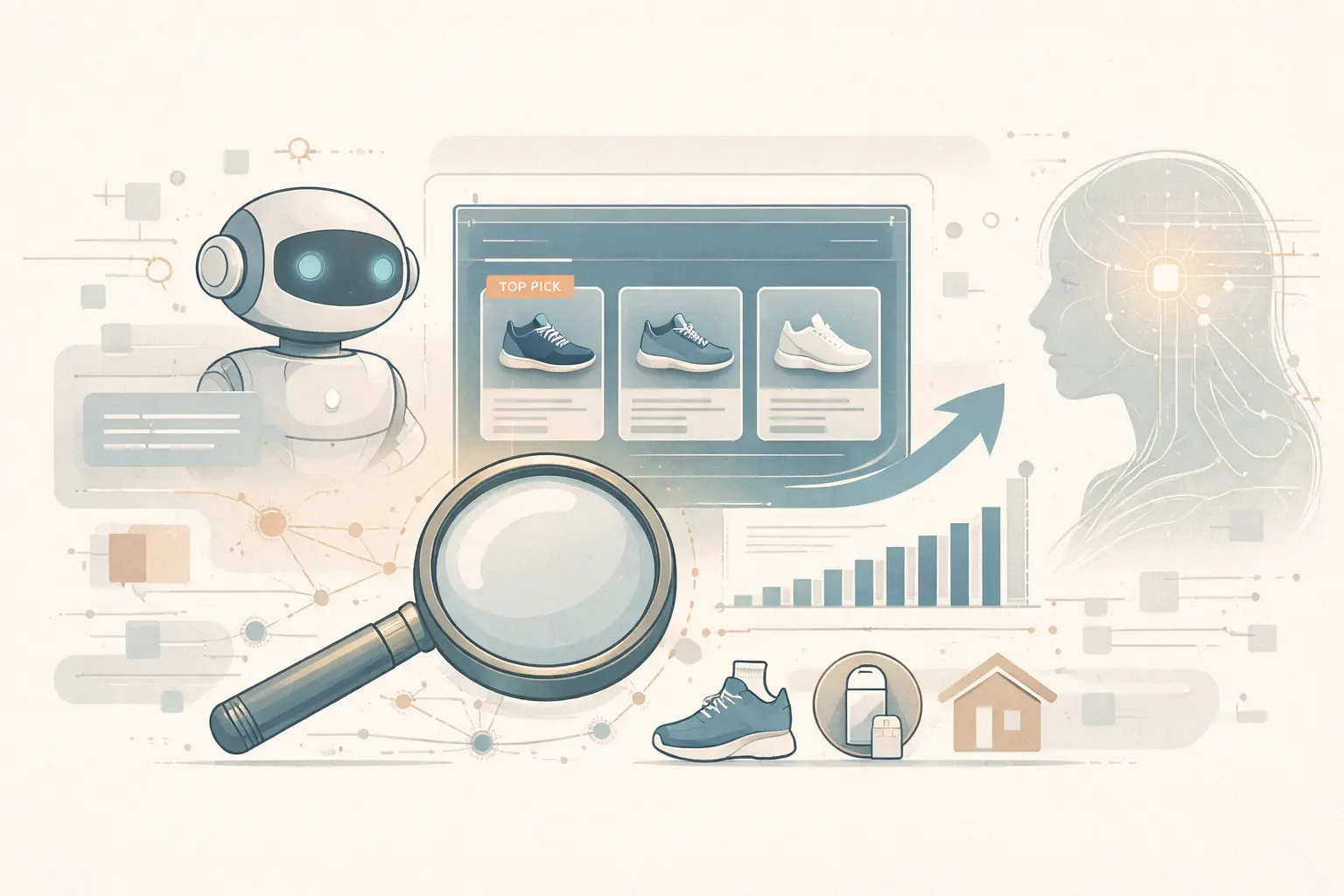
GEO Explained: How to Win Customers with AI in 2026
Search is changing fast. With AI-powered tools like ChatGPT, Perplexity, Claude, and Google’s AI Overviews becoming part of everyday life, customers no longer discover products the same way they did through traditional search engines. Instead of clicking through pages of links, people increasingly receive direct, summarized answers.
This shift is already reshaping how brands show up online. Organic traffic is shrinking, zero-click experiences are growing, and more of the customer journey is happening inside AI interfaces. To compete in this new environment, businesses need a new playbook. That playbook is Generative Engine Optimization (GEO).
The Current AI Landscape
AI-powered search has moved from novelty to habit. Millions of people now use generative tools to ask questions, compare options, and guide purchasing decisions. Unlike traditional search, which points users to websites, generative engines synthesize information and present a single, conversational response.
Industry research shows that a large share of searches now end inside AI summaries, with users relying on these answers for a growing portion of their queries. At the same time, usage of tools like ChatGPT continues to surge, especially for shopping-related prompts. Consumers are becoming comfortable asking AI what to buy, which brands to trust, and how products compare.
This is not a short-term trend. As AI becomes embedded into browsers, operating systems, voice assistants, and shopping apps, generative answers will increasingly sit between your brand and your customer. That means visibility inside AI responses is becoming a primary growth channel.
2026 and Beyond: A New Era of Product Discovery
Think about how people used to buy products online. A customer would Google a query like “best running shoes for flat feet,” scan a few results, click into review sites, and eventually land on a brand page.
Now the same customer might ask an AI assistant:
“What are the best running shoes for flat feet under $150?”
Instead of ten blue links, they receive a short list of recommendations with explanations. If your brand is not mentioned in that answer, you may never even enter the customer’s consideration set.
As AI becomes more deeply integrated into devices and platforms, this pattern will only accelerate. The traditional search results page is giving way to dynamic, AI-generated answers. For brands, this means discoverability is no longer just about ranking - it is about being referenced.
The Shift from SEO to GEO
For years, digital growth strategies revolved around SEO:
- Rank on Google
- Earn clicks
- Convert visitors
That model still matters, but it is no longer enough. Generative engines change the objective:
- SEO: Compete for positions in search results.
- GEO: Compete to be cited inside AI-generated answers.
This is a fundamental shift. GEO focuses less on keyword tactics alone and more on credibility, clarity, and machine-readability. AI systems favor sources that are authoritative, well-structured, and easy to interpret. In practice:
SEO helps you get found.
GEO helps you get quoted.
Why GEO Matters
The Challenge: Declining Organic Traffic
As more queries are resolved directly inside AI interfaces, fewer users click through to websites. Even top-ranked pages may see reduced traffic when AI summaries answer questions without requiring a visit.
The Opportunity: Influence at the Source
Being referenced inside an AI answer places your brand directly in front of the customer at the moment of decision. You are no longer competing for attention on a crowded results page - you are part of the trusted response.
The Early-Mover Advantage
Most companies are still optimizing for yesterday’s search model. Brands that invest in GEO early can establish authority and visibility in AI systems before the space becomes crowded, similar to how early SEO adopters gained outsized advantages in the 2000s.
How GEO Works in Practice
GEO is not a single tactic - it is a system. At Cloudbrook, we think about it in three layers:
1. Visibility Tracking
You need to know where and how your brand appears in AI answers. This means monitoring platforms like ChatGPT, Perplexity, and Gemini to understand when you are cited, how often, and in what context.
2. Prompt and Topic Mapping
Customers ask specific questions:
- “Best project management tools for startups”
- “Top skincare brands for sensitive skin”
Mapping these prompts helps you see where your brand is visible, where competitors dominate, and where there are gaps you can own.
3. AI-Focused Content Optimization
GEO requires content designed to be referenced by machines as well as read by humans. That means clear structure, strong entity definitions, credible sourcing, and helpful explanations. Blog posts, guides, FAQs, and comparison content all play a role in building AI-readable authority.
Real-World Signals of GEO’s Impact
We are already seeing uneven shifts across industries:
- Technology and consumer electronics brands are gaining visibility in AI-driven discovery.
- Beauty, skincare, and fashion are heavily searched in generative tools as customers look for recommendations.
- Home, lifestyle, and wellness categories are seeing increased AI-led product research.
Some early adopters report dramatic growth in inbound interest driven by AI discovery. The pattern is clear: brands that show up consistently in AI answers are pulling ahead, while others quietly lose ground.
What Every Brand Should Do Now
If GEO is not part of your strategy yet, here is where to start:
- Audit your current AI visibility
- Map the key prompts in your category
- Optimize content for authority and machine-readability
- Monitor which competitors are being cited
- Move quickly - momentum compounds in AI systems
The Bottom Line
Search is becoming generative. Traditional SEO still matters, but it no longer defines the full picture of discoverability. In an AI-first world, visibility happens inside answers, not just on results pages.
Generative Engine Optimization (GEO) is how brands earn a place in those answers.
When customers ask AI about your product category tomorrow, one question matters:
Will your brand be part of the answer - or left out of the conversation?
Ready to increase your visibility in AI answers? Explore the Cloudbrook GEO solution with a Free AI Discovery Audit.